Uyuni

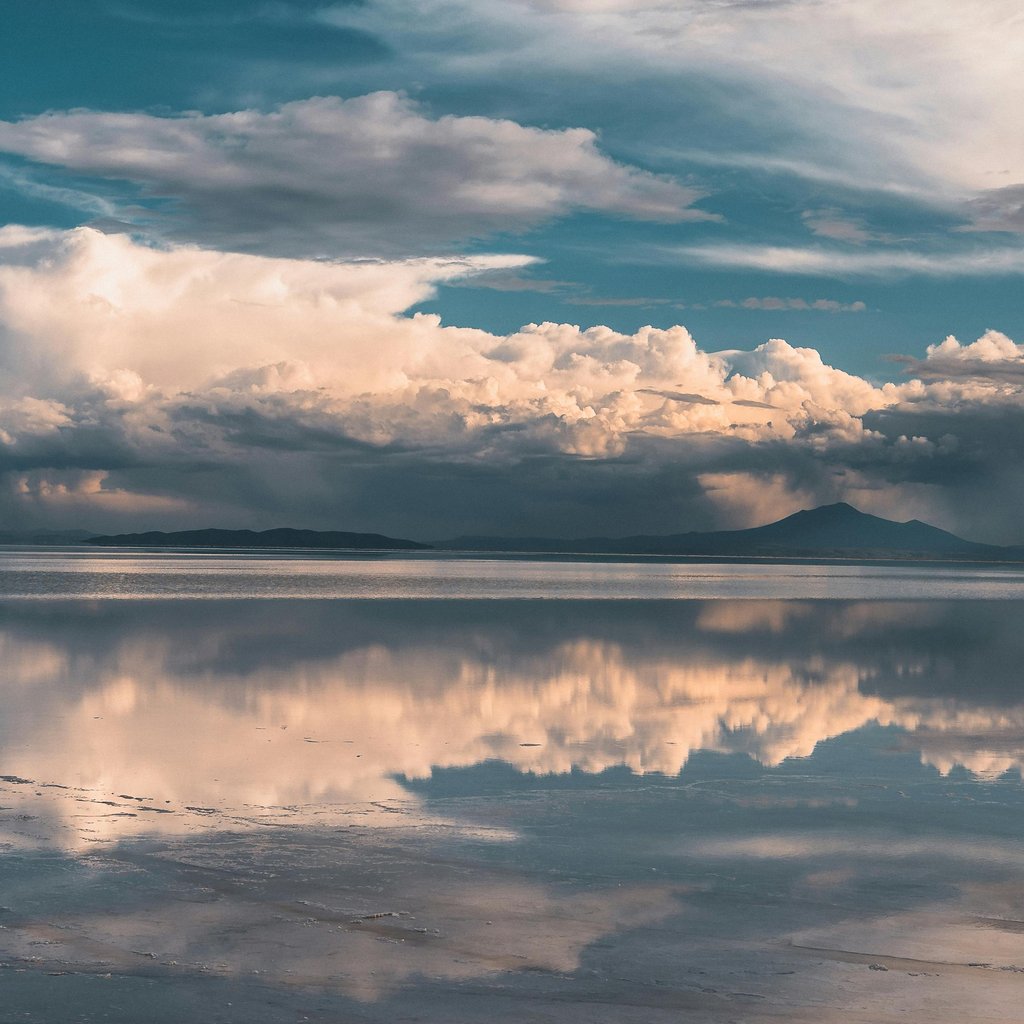
Capture the mesmerizing cloud reflections over the expansive Salar de Uyuni salt flats in Bolivia.
Willian Justen de Vasconcellos, Pexels

Uyuni, Bolivia, serves as the main entry point to the Salar de Uyuni, the world's largest salt flat. This destination offers an unparalleled landscape where visitors witness the vast, reflective expanse of salt, vibrant lagoons, geysers, and unique rock formations.

The town of Uyuni itself acts mainly as a departure point for tours, with social interaction for tourists largely occurring among fellow travelers on multi-day excursions. Hostels provide accommodation for backpackers, but the town is not known for distinct social districts or a vibrant nightlife scene.

Top 6 Things to do in Uyuni

A journey through Uyuni primarily involves exploring the unique landscapes of the Salar de Uyuni and the surrounding Andean desert.

1. Salar de Uyuni Exploration

Traverse the expansive Salar de Uyuni, the world's largest salt flat, which transforms into a colossal mirror during the rainy season (December to April), reflecting the sky and creating breathtaking illusions. During the dry season, the vast white expanse is ideal for creative perspective photography. Witnessing a sunrise, sunset, or stargazing over the salt flats is an unparalleled experience due to the clear, unpolluted skies.

Cost: Most visitors experience the Salar as part of a multi-day 4x4 tour, with shared tours ranging from approximately $169 to $300 USD per person for 3 days, including meals and basic accommodation. A full-day tour focusing only on the salt flats can cost around $60 - $162 USD. Private tours are available at a significantly higher cost, starting from $680 USD for a 3-day tour for a group.

Transport: Accessing the salt flats is almost exclusively done via organized 4x4 tours departing from Uyuni town. Public transportation is not available for this remote region.


2. Visit the Train Cemetery (Cementerio de Trenes)

Explore the atmospheric Train Cemetery, located on the outskirts of Uyuni. This site features numerous rusting, abandoned locomotives and train carriages from the late 19th and early 20th centuries, remnants of Bolivia's former mining railway boom. It offers unique photographic opportunities against a dramatic desert backdrop.

Cost: There is no entrance fee to visit the Train Cemetery. It is typically included as the first stop on almost all Salar de Uyuni tours.

Transport: The Train Cemetery is about 2.7 km (1.6 miles) southwest of Uyuni town. It is usually visited as part of a guided 4x4 tour to the salt flats. Taxis from Uyuni to the cemetery would be an option for a quick, independent visit but are not cost-effective if planning to continue to the salt flats.

3. Explore Isla Incahuasi (Cactus Island)

Discover Isla Incahuasi, a rocky outcrop in the middle of the Salar de Uyuni, famous for its giant cacti that can grow up to 12 meters (39 feet) tall and are believed to be over a thousand years old. This 'island' provides a high vantage point for panoramic views of the vast salt flats, and visitors can trek among the ancient cacti.

Cost: An entrance fee of approximately 30 Bolivianos (Bs.) (around $4.30 USD) for foreign visitors is required. This fee often includes access to basic toilet facilities.

Transport: Isla Incahuasi is a key stop on most Salar de Uyuni tours and is only accessible by 4x4 vehicle across the salt flats.

4. Witness Altiplanic Lagoons and Wildlife

Journey through the Eduardo Avaroa Andean Fauna National Reserve to encounter a series of vividly colored lagoons, such as Laguna Colorada, Laguna Verde, Laguna Hedionda, and Laguna Cañapa. These high-altitude lakes are home to various species of flamingos and other Andean wildlife. Laguna Colorada, with its striking red hues from algae and minerals, is a highlight.

Cost: Entrance to the Eduardo Avaroa Andean Fauna National Reserve costs approximately 150 Bolivianos (Bs.) per person, which is typically not included in tour prices. The overall experience is part of multi-day 4x4 tours.

Transport: These lagoons are deep within the Andean desert and are exclusively visited as part of multi-day 4x4 tours. Public transport is not an option.

5. Experience Geysers and Hot Springs

Visit the Geyser Sol de Mañana, a high-altitude geothermal field featuring bubbling mud pots and steam vents, creating an otherworldly, volcanic landscape. Nearby, unwind in the Polques Hot Springs, natural thermal pools offering a chance to relax amidst the chilly Andean desert scenery.

Cost: Entrance to the hot springs costs approximately 10-15 Bolivianos (Bs.) per person. The geysers are included in the National Reserve entrance fee. This activity is part of the multi-day 4x4 tours.

Transport: These geothermal sites are located in remote areas of the Andean desert and are only accessible as part of multi-day 4x4 tours.

6. Admire Unique Rock Formations

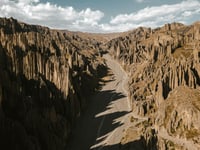
Encounter fascinating rock formations carved by wind and erosion, such as the 'Arbol de Piedra' (Stone Tree) and the surreal landscapes of the Salvador Dalí Desert. These geological wonders provide striking visual interest and further highlight the unique and varied terrain of the region.

Cost: These natural formations are included as part of the broader multi-day 4x4 tour itineraries, with no specific individual entrance fees beyond the National Reserve entrance if applicable.

Transport: These sites are located in the remote desert regions and are exclusively visited via organized multi-day 4x4 tours.

Discover destinations in Bolivia