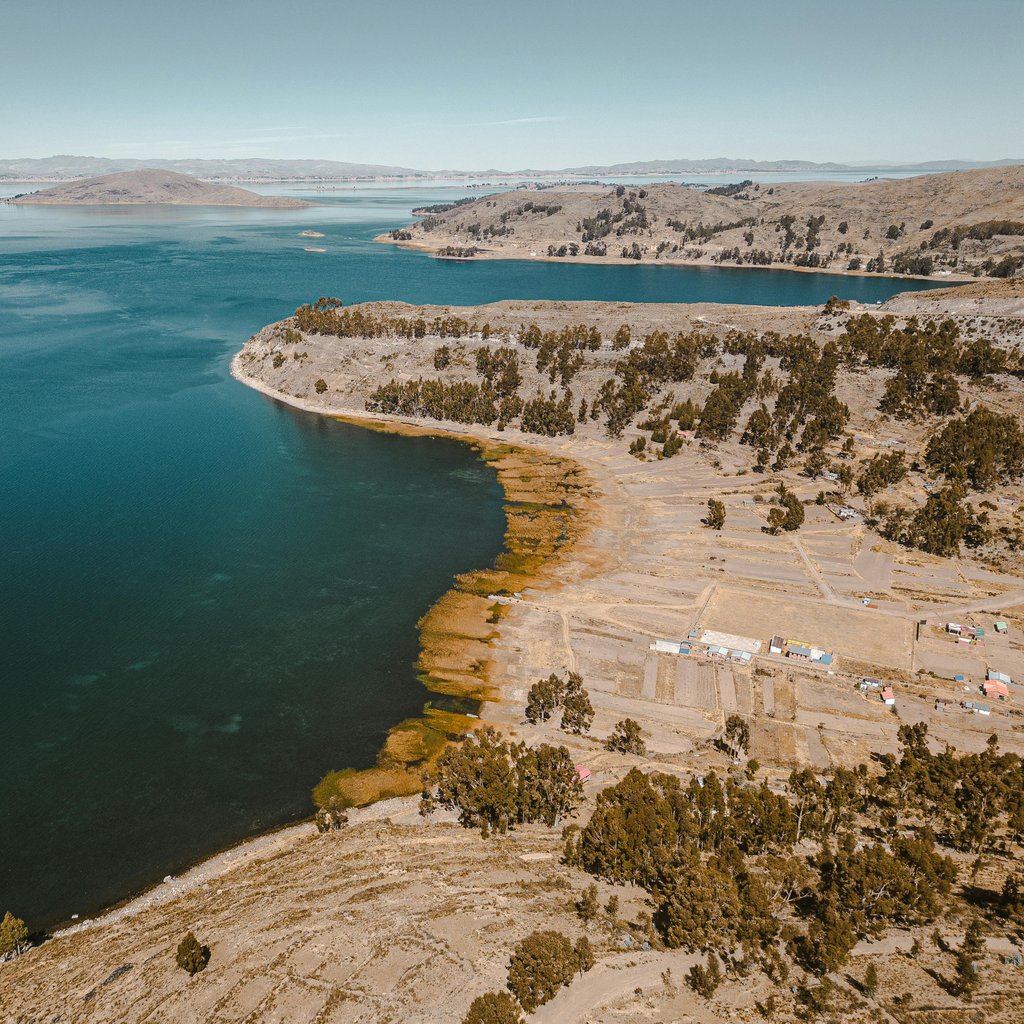
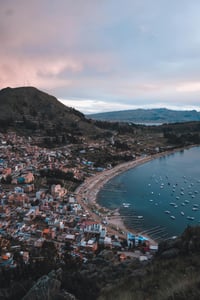
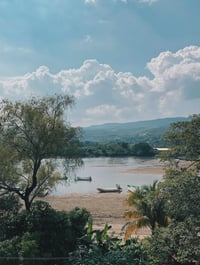
Isla del Sol, situated on the Bolivian side of Lake Titicaca, presents a tranquil escape known for its sacred Inca history and breathtaking high-altitude landscapes. It offers visitors a unique blend of cultural immersion, archaeological exploration, and serene natural beauty.
The southern village of Yumani serves as the primary hub for visitors, featuring a higher concentration of hostels and restaurants. It offers opportunities to socialize with other travelers, particularly around dining establishments and viewpoints, especially when enjoying the island's renowned sunsets. The island's overall atmosphere, however, leans towards tranquility rather than bustling social scenes, encouraging quiet relaxation and interaction with local Aymara and Quechua communities.
Top 5 Things to do in Isla del Sol
Activities primarily involve exploring ancient Inca ruins, embarking on scenic hikes across the island, and enjoying the serene beauty of Lake Titicaca.
1. Hike the North to South Island Trail (Willa Thaki)
We embarked on the Willa Thaki, or Sacred Route of the Eternal Sun, a rewarding hike that spans the length of Isla del Sol. This path winds along the island's ridges, offering continuous panoramic views of Lake Titicaca and the distant Cordillera Real. Along the way, you encounter various archaeological sites and pass through local villages, providing a deeper understanding of the island's history and local life. The trek can be challenging due to altitude and some steep sections, so carrying enough water and wearing comfortable hiking shoes are essential. It is advisable to start early to allow ample time for exploration and stops.
Cost: Accessing different sections of the island typically involves a general entrance fee of approximately 10 BOB upon arrival to the island. You might encounter additional small local taxes of 5-15 BOB when passing between different community-controlled areas.
Transport: Boats from Copacabana depart to both the northern village of Challapampa and the southern village of Yumani. A public shared boat costs around 25-30 BOB one-way to either side, or 50 BOB for a same-day round trip. If you choose to hike north to south, we recommend taking a morning boat to Challapampa (approximately 2 hours) and then hiking south towards Yumani to catch a later boat back to Copacabana from there (approximately 1 hour 30 minutes).
2. Explore the Chincana Inca Ruins and Sacred Rock
On the northern side of Isla del Sol, we immersed ourselves in the Chincana Inca Ruins, also known as the 'Labyrinth of the Inca.' This intricate complex of stone structures and terraces is a fascinating archaeological site. Nearby, the Sacred Rock (Titi Qala) holds significant mythological importance as the birthplace of the Inca sun god, Inti. Exploring these sites offers a profound connection to Inca history and provides stunning views over the lake, particularly from the Mirador Cerro Tikani. We found the atmosphere here to be more remote and less crowded, allowing for a truly contemplative experience.
Cost: An additional entry fee of 10-15 BOB is required to access the Chincana Inca Ruins area.
Transport: Accessible by boat from Copacabana to Challapampa (north port), taking about 2 hours. From Challapampa, it is an uphill walk of approximately one hour to reach the ruins. Alternatively, if staying in Yumani, one can hike north to Chincana (around 2-3 hours) or take a boat between Yumani and Challapampa.
3. Visit Pilko Kaina Temple (Palacio del Inca)
In the southern part of the island, we explored the well-preserved Pilko Kaina ruins. This two-level Inca temple, also known as the Palacio del Inca, is believed to have been built by the Inca emperor Túpac Inca Yupanqui. Situated on a terraced slope with commanding views of Lake Titicaca, the architecture here provides a glimpse into the advanced building techniques of the Inca civilization. We found it a peaceful spot to reflect on the ancient history of the region.
Cost: Access to Pilko Kaina is generally covered by the overall island entrance fee, though specific small local fees might apply in some cases.
Transport: The ruins are located about a 30-minute walk (2 km) south from the main village of Yumani. Yumani is reached by boat from Copacabana (approximately 1 hour 30 minutes).
4. Climb the Inca Steps and Drink from the Fountain of Youth
Upon arriving in Yumani, we ascended the steep Inca Steps, a historical stairway carved into the hillside that leads up to the village. At the top of these more than 200 steps, we discovered the Fuente del Inca, or Fountain of Youth. It is said that drinking from its three streams, representing the Inca motto, grants eternal youth. While the climb is tiring, the historical significance and the refreshing water make it a worthwhile effort. The views from Yumani village, especially during sunset, are exceptional.
Cost: No specific cost beyond the general island entrance fee.
Transport: The Inca Steps begin directly from the southern port of Yumani, where boats from Copacabana arrive.
5. Witness a Sunrise or Sunset over Lake Titicaca
Spending an evening on Isla del Sol allowed us to witness some of the most spectacular sunrises and sunsets over Lake Titicaca. As the sky transforms with vibrant colors, reflecting off the vast, calm waters of the lake, we experienced a profound sense of tranquility. The high altitude and clear skies enhance the celestial display, making it a memorable part of any visit. Yumani village, with its elevated position, offers many excellent viewpoints for this natural spectacle.
Cost: No specific cost.
Transport: Best experienced from various viewpoints around Yumani village in the south, which is accessible by boat from Copacabana.
At TFA Travel we believe in travel for all. Our mission is to enable people to explore the world as easily as possible without having to pay a travel agent a huge commission.
Our typical audience are those that want to see something new and get involved with authentic experiences of a country. Whether you are a backpacker, solo traveller, solo female traveller, straight or LGBTQ+ couple, family, you will find local and authentic experiences here.