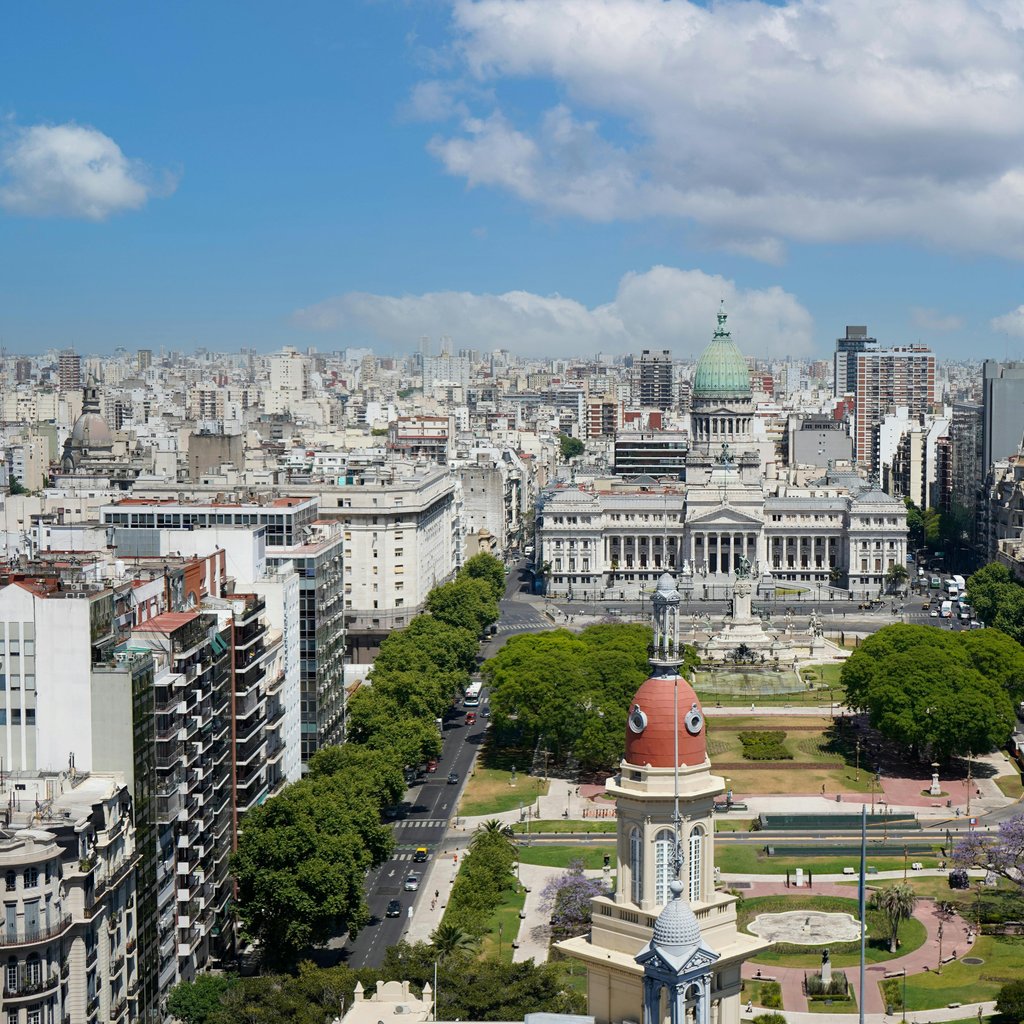
Buenos Aires is well-equipped with major transport hubs to facilitate arrivals and departures. The primary international gateway is Ezeiza International Airport (EZE), while domestic flights and some regional international flights use Aeroparque Jorge Newbery (AEP). For overland travel, the bustling Retiro Bus Terminal serves as the main hub for long-distance buses, located near the Retiro Train Station, which handles suburban and some long-distance rail services. Additionally, the Buquebus Ferry Terminal, situated close to Retiro, offers connections to Uruguay.
By Air:
Ezeiza International Airport (EZE):: This airport is approximately 45 minutes to 1 hour and 20 minutes from the city center by car, depending on traffic. Private transfers offer a comfortable option, with costs around $28-$40 USD. Taxis are available outside the arrivals hall and typically cost about $45 USD (€40). Ride-share apps like Uber and Cabify can be used, with fares around $25 USD (€23). Shuttle buses, such as Tienda León, connect the airport to central Buenos Aires (Terminal Madero) for approximately $13 USD, taking about 50 minutes. The public bus, Line 8, is the most economical choice at about $0.72-$0.75 USD, though it can take 1 hour 30 minutes to 2 hours. A SUBE card is required for public buses.
Aeroparque Jorge Newbery (AEP):: Closer to the city center, AEP is about 15-20 minutes by car. Taxis to Microcentro are around $10 USD. Private transfers can cost about $18 USD. Shuttle buses by Tienda León to Terminal Madero cost approximately $6 USD. Public buses (Lines 8, 33, 34, 37, 45, 160, 166) are available from around $0.75 USD, taking about 45 minutes, requiring a SUBE card.
By Bus (Long-distance):
The Retiro Bus Terminal serves as the central point for bus travel throughout Argentina and to neighboring countries including Uruguay, Brazil, Paraguay, Bolivia, and Chile. Travel times and costs vary significantly based on destination and service level. For example, a trip to Iguazu can take 17 hours. Tickets can be booked online via platforms like Plataforma10 or Omnilineas, or purchased directly at the terminal.
By Train:
While long-distance train travel within Argentina is less extensive than bus services, trains are efficient for reaching Buenos Aires' outer suburbs and nearby towns, such as Tigre. The main train stations in Buenos Aires, including Retiro, serve these routes. A SUBE card is necessary for train travel within the city and its suburbs, with fares typically starting around $0.15-$0.22 USD as of February 2024.
By Ferry:
Ferries operate between Buenos Aires and various destinations in Uruguay, including Colonia del Sacramento, Montevideo, and Punta del Este. Operators like Buquebus and Colonia Express provide these services. Travel times vary: direct high-speed ferries to Colonia del Sacramento take about 1 hour 15 minutes, while direct ferries to Montevideo take around 2 hours 30 minutes. Fares typically range from approximately $55 USD to $268 USD, depending on the route and company.
By Car Rental:
Car rental services are available at both Ezeiza and Aeroparque airports, as well as at various locations within the city center, providing flexibility for those who prefer to drive.
At TFA Travel we believe in travel for all. Our mission is to enable people to explore the world as easily as possible without having to pay a travel agent a huge commission.
Our typical audience are those that want to see something new and get involved with authentic experiences of a country. Whether you are a backpacker, solo traveller, solo female traveller, straight or LGBTQ+ couple, family, you will find local and authentic experiences here.