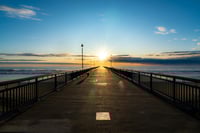
The Catlins offers a pristine natural environment with rugged coastlines, lush forests, numerous waterfalls, and abundant marine wildlife, providing a peaceful escape for nature enthusiasts and a focus on natural exploration.
The Catlins is a sparsely populated and quiet region, with few dedicated areas for extensive social interaction among tourists or backpackers. While small towns offer basic amenities, it is not a destination known for its social scene.
Top 6 Things to do in The Catlins
The Catlins offers a range of nature-based experiences, including exploring impressive waterfalls, witnessing unique coastal geological formations, and observing diverse marine wildlife.
1. Nugget Point Lighthouse
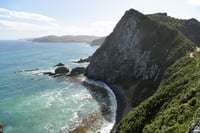
A visit to Nugget Point involves a short walk along a winding path to a historic lighthouse, offering panoramic views of the rugged coastline and the iconic rock formations known as 'The Nuggets'. This area is excellent for spotting fur seals, sea lions, and various seabirds, with opportunities to see yellow-eyed penguins at Roaring Bay nearby, particularly at sunrise. The dramatic scenery makes it ideal for photography.
Cost: Access is free.
Transport: The lighthouse is approximately a 15-minute drive from Kaka Point. Due to limited public transport in The Catlins, a personal vehicle is essential for access.
2. McLean Falls
McLean Falls is considered one of The Catlins' most beautiful waterfalls. The experience involves a scenic 20-minute walk through lush native rainforest, leading to the impressive multi-tiered falls. Along the way, a smaller waterfall known as 'The Chute' can be observed. The track has some uneven sections and steps, requiring suitable footwear.
Cost: Access is free.
Transport: The car park for McLean Falls is reached via a 3-kilometre gravel road from the main highway. A personal vehicle is required.
3. Purakaunui Falls
This iconic, three-tiered waterfall is one of New Zealand's most photographed natural attractions. A gentle 10-minute return walk through native forest leads to well-placed viewing platforms, allowing visitors to appreciate the cascade's beauty. It is a relaxing activity suitable for most fitness levels.
Cost: Access is free.
Transport: The falls are easily accessible from Purakaunui Falls Road. A personal vehicle is necessary.
4. Cathedral Caves
The Cathedral Caves are massive sea caves, reaching up to 30 metres in height and spanning approximately 200 metres, which are only accessible at low tide. The visit begins with a 1-kilometre walk through coastal forest from the car park to the beach, followed by a 5-10 minute walk along the sands to the cave entrances. The track to the beach includes steep sections. Visitors should consult tide times and check for opening hours before planning their visit, as access is restricted. These caves hold historical significance for the Māori people.
Cost: Entry costs $15 per adult and $2 per child. EFTPOS is available.
Transport: The caves are located about 15 kilometres south of Papatowai and 2 kilometres off the main highway. A personal vehicle is required.
5. Curio Bay Petrified Forest and Wildlife
Curio Bay offers a unique blend of geological and wildlife wonders. At low tide, visitors can walk among the petrified remains of an ancient forest, dating back 160-170 million years. The bay is also a crucial habitat for the rare yellow-eyed penguin (hoiho), which can often be seen returning to shore to nest around sunset. Adjacent Porpoise Bay is known for regular sightings of Hector's dolphins, with opportunities to swim alongside them. Dedicated viewing platforms are in place for wildlife observation.
Cost: Access to the petrified forest and wildlife viewing is free. Guided kayaking tours for dolphin encounters are available in the broader Catlins area, with prices varying by operator.
Transport: Curio Bay is accessible by personal vehicle.
6. Slope Point
Visiting Slope Point allows one to stand at the southernmost tip of New Zealand's South Island. A short walk across farmland leads to a signpost indicating distances to the Equator and South Pole. The area is renowned for its persistent, strong winds, which have sculpted the trees into distinctively wind-swept shapes, creating a striking photographic landscape.
Cost: Access is free.
Transport: Slope Point is accessible by personal vehicle.
At TFA Travel we believe in travel for all. Our mission is to enable people to explore the world as easily as possible without having to pay a travel agent a huge commission.
Our typical audience are those that want to see something new and get involved with authentic experiences of a country. Whether you are a backpacker, solo traveller, solo female traveller, straight or LGBTQ+ couple, family, you will find local and authentic experiences here.





/ohakune_(tongariro_national_park_area)_filelandscape_in_tongariro_national_park_19.jpg)
/napier_(hawke's_bay)_filenapier_and_bay.jpg)
/martinborough_(wairarapa)_filemartinborough_from_rapaki.jpg)
/fiordland_(te_anau)_14375108.jpeg)
/aoraki__mount_cook_&_mackenzie_region_(mount_cook_villagelake_tekapo)_filemount_aoraki_mt-_cook_and_mount_tasman_-_lake_matheson_new_zealand.jpg)
/glacier_country_(franz_joseffox_glacier)_filefox_glacier_nz_9381870476.jpg)
/bay_of_islands_(paihiarussell)_filerussell_new_zealand.jpg)
/coromandel_peninsula_(whitiangahahei)_filehahei_beach_from_north.JPG)

/nelson_(abel_tasman_national_park_area)_18915650.jpeg)
/marlborough_(pictonblenheim)_fileview_of_the_harbour_in_picton_05.jpg)