Wrocław

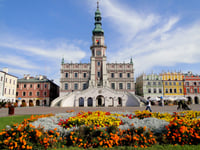
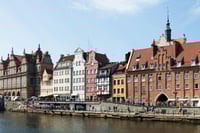
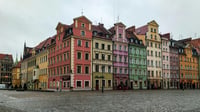
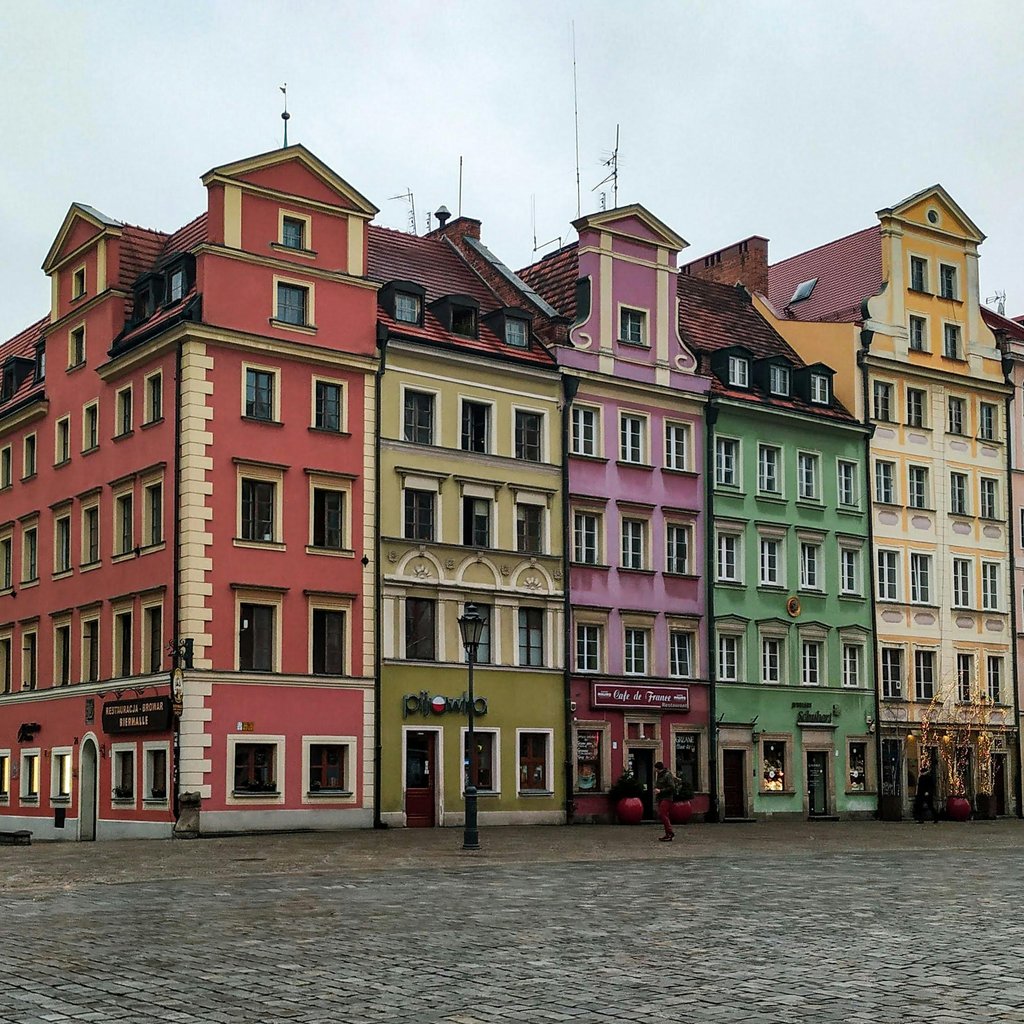
Vibrant tenement houses in Wrocław's town square, showcasing architectural charm in Poland.
Kostas Dimopoulos, Pexels

Wrocław, Poland, offers a charming blend of historical architecture, vibrant cultural scenes, and picturesque riverside settings. It is a city where visitors can explore a rich past while enjoying a modern and lively atmosphere.

The Market Square (Rynek) forms the vibrant heart of the city, bustling with cafes, restaurants, and pubs, making it an excellent spot for socializing. Nearby, Plac Solny and Św. Antoniego street also provide numerous options for dining and drinks. For backpackers, the Centrum district is a hub with hostels and lively venues for meeting other travelers.

Top 8 Things to do in Wrocław

Wrocław offers a diverse range of engaging activities, from exploring historical sites and cultural institutions to unique city-wide scavenger hunts and relaxing river cruises.

1. Explore the Market Square and Old Town

The Market Square, known as Rynek, serves as the vibrant heart of Wrocław's Old Town. I enjoyed wandering through this expansive square, one of Europe's largest, admiring the colorful, picturesque tenement houses and the intricate architecture of the Town Hall. It is a perfect place to observe local life, discover hidden courtyards, and find numerous cafes and restaurants. The adjoining Plac Solny, with its flower market, also offers a charming spot to relax.

Cost: Exploring the Market Square and Old Town is free. Costs for food, drinks, or shopping vary.

Transport: The Market Square is centrally located and easily walkable from most city center accommodations.


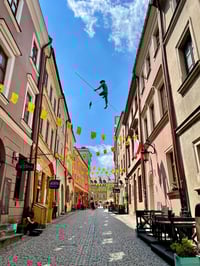
2. Go Dwarf Hunting

A truly unique and playful experience in Wrocław is searching for its hundreds of small dwarf sculptures scattered across the city. Each dwarf has its own personality and story, often reflecting the area or business they are near. I found this to be an engaging activity for all ages, encouraging exploration of both main attractions and charming side streets. Maps can be purchased from tourist information centers, or one can simply enjoy the surprise of discovering them spontaneously.

Cost: Hunting for dwarfs is free. A map from the tourist office costs a few Polish Zloty (PLN).

Transport: The dwarfs are found throughout the city, particularly concentrated in the Old Town area, making it a walkable activity.

3. Visit Ostrów Tumski (Cathedral Island)

Stepping onto Ostrów Tumski, Cathedral Island, feels like entering a different era. As the oldest part of Wrocław, its cobblestone streets lead to the impressive Cathedral of St. John the Baptist with its majestic spires. I particularly enjoyed the evening strolls here, where a lamplighter still manually lights the gas lamps, creating a magical atmosphere. Exploring the Cathedral's baroque chapels or ascending to the top for city views provides a deeper appreciation of this historic area.

Cost: Exploring the island is free. A ticket to access the viewing terrace or the baroque chapels of the Cathedral of St. John the Baptist costs 15 PLN for a normal ticket and 10 PLN for a reduced ticket.

Transport: Ostrów Tumski is within walking distance of the Market Square.

4. Experience the Panorama Racławicka

The Panorama Racławicka offers a unique immersive experience, presenting a monumental 19th-century panoramic painting depicting the Battle of Racławice. The scale and artistic techniques create a captivating illusion, transporting visitors into a historical event. I found the audio guide enhances the experience, providing detailed context. A ticket here also grants free entry to the National Museum in Wrocław, the Ethnographic Museum, and the Four Domes Pavilion within three months.

Cost: A regular ticket costs 50 PLN, a discount ticket is 35 PLN, and a family ticket is 35 PLN per person (for 1-2 parents/guardians with children aged 7-18).

Transport: The Panorama Racławicka is located at ul. Purkyniego 11, which is within walking distance of the city center. Public transport (trams/buses) is also an option if preferred, though specific lines and costs were not detailed in recent searches.

5. Discover Hydropolis

Hydropolis is an interactive science center dedicated entirely to water. Housed in a former clean water tank, it offers engaging multimedia exhibitions and displays covering various aspects of water, from deep-sea creatures to water engineering and its role in human life. I found it to be an entertaining and educational experience, particularly well-suited for families and those interested in science and nature.

Cost: A regular ticket costs 45 PLN on weekdays and 47 PLN on weekends/holidays. Concessionary tickets are 36 PLN/38 PLN. A family ticket (2 adults + 2 children) costs 130 PLN on weekdays and 140 PLN on weekends/holidays. Booking online for weekends is recommended.

Transport: Hydropolis is located at Na Grobli 17. It can be reached by public transport: take bus 920 to the 'Na Grobli (Hydropolis)' stop, or buses D, 145, 146, 149 to 'Urząd Wojewódzki (Impart)' stop. Trams 3, 5, 16 go to 'Plac Wróblewskiego', and trams 4, 33 go to 'Urząd Wojewódzki (Impart)' stop.

6. Visit Centennial Hall and Japanese Garden

The Centennial Hall, a UNESCO World Heritage site, is a magnificent example of modernist architecture from 1913. I was impressed by its vast concrete dome, which was a pioneering engineering feat for its time. Surrounding the hall is Szczytnicki Park, offering a peaceful green escape, and the beautiful Japanese Garden, a tranquil spot perfect for a leisurely stroll. The multimedia fountain shows, held hourly, are particularly impressive in the warmer months and after dark.

Cost: Visiting the Centennial Hall typically involves entry to its Visitor Center with multimedia exhibitions (cost not explicitly stated in recent searches, but often reasonable). Access to the Japanese Garden usually requires a separate entry fee, generally low.

Transport: The Centennial Hall is located at Wystawowa 1. It is accessible by public transport (trams and buses) from the city center; specific lines are best checked locally. While walkable, it is a longer distance from the strict city center.

7. Take an Oder River Cruise

A boat trip on the Oder River offers a unique perspective of Wrocław, showcasing its numerous bridges, islands, and historical architecture from the water. I found this to be a relaxing way to see many landmarks and enjoy the city's picturesque riverside setting. Various cruise options are available, from short scenic tours to private charters, departing from several points near the city center.

Cost: A 40-45 minute shared boat trip costs approximately 50 PLN (normal) or 40 PLN (reduced) with operators like Funboat, or around 65 PLN for traditional boat trips in 2025. Private charters start from about 550-650 PLN per hour for a group.

Transport: Cruises typically depart from central points like Przystań Włostowica or Most Piaskowy (Sand Bridge), which are easily accessible by walking or a short public transport ride from the city center.

8. Explore Wrocław University and Aula Leopoldina

The University of Wrocław's main building houses the stunning Aula Leopoldina, a magnificent Baroque ceremonial hall. I was captivated by its ornate decorations, frescoes, and grand scale, reflecting the university's rich history. A visit here often includes access to other parts of the university museum, such as the Mathematical Tower, which offers panoramic views of the city.

Cost: A ticket for two attractions (often including Aula Leopoldina and Mathematical Tower) costs 10 PLN for a normal ticket and 6 PLN for a reduced ticket. A family ticket for three attractions is 25 PLN.

Transport: The University of Wrocław is centrally located and can be reached with a short walk from the Market Square.

Discover destinations in Poland