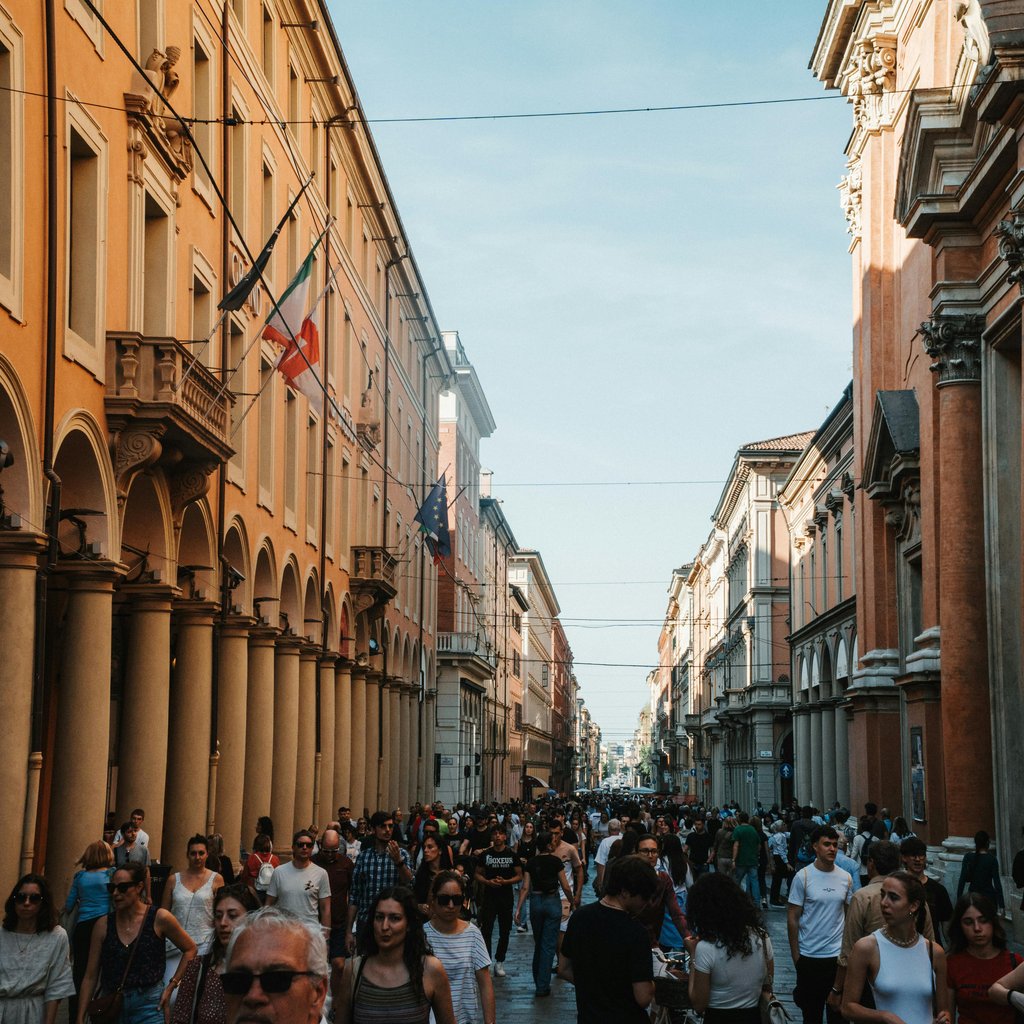
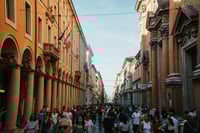
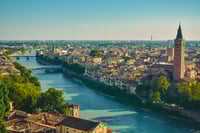
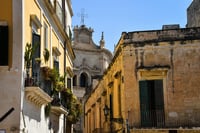
Bologna, known as Italy's culinary capital, offers an authentic experience rich in medieval history and culture, making it an ideal destination for those seeking a genuine Italian atmosphere away from typical tourist crowds. Its ancient porticoes, historic university, and celebrated cuisine draw visitors who appreciate a city that feels lived in by locals.
Social interaction points are prominent around Piazza Maggiore, which serves as a bustling hub for both residents and travelers, complete with dining and entertainment options. The Quadrilatero district offers a lively market atmosphere centered on food, while the University district, including areas like Via Zamboni and Via Pratello, provides vibrant nightlife with various bars and clubs popular with students and young visitors.
Top 6 Things to do in Bologna
Experiences in Bologna largely involve immersing oneself in its renowned food culture, exploring ancient historical sites, and appreciating unique cityscapes.
1. Indulge in Bologna's Culinary Delights at the Quadrilatero
The Quadrilatero is Bologna's ancient market district, a labyrinth of narrow streets filled with food shops, delis, and eateries. It is here that visitors can truly experience the city's reputation as Italy's gastronomic capital. One can wander through the stalls, sampling local specialties such as tortellini, mortadella, Parmigiano Reggiano, and aged balsamic vinegar. The area becomes particularly lively during aperitivo hours, offering a quintessential Bolognese social experience. To delve deeper, a guided food tour provides expert insights into the regional cuisine and hidden culinary gems.
Cost: Self-guided exploration is free, with food purchases varying. Guided food tours typically range from €85 to €122 per person.
Transport: The Quadrilatero is centrally located, within easy walking distance of Piazza Maggiore.
2. Ascend the Clock Tower for Panoramic City Views
For a breathtaking perspective of Bologna's terracotta rooftops and medieval skyline, a climb to the top of the Clock Tower (Torre dell'Orologio) is highly recommended. Situated within the historic Palazzo d'Accursio on Piazza Maggiore, this ascent provides a 360-degree panorama. It offers an excellent alternative for expansive city views, especially since the Asinelli Tower is currently closed for maintenance.
Cost: Entrance costs €10, which often includes access to the Municipal Art Collections.
Transport: The Clock Tower is located in Piazza Maggiore, making it easily accessible on foot from anywhere in the city center.
3. Wander through Piazza Maggiore and Basilica di San Petronio
Piazza Maggiore serves as the vibrant heart of Bologna, an expansive square surrounded by magnificent historical buildings. These include the Palazzo d'Accursio, home to the City Hall, and the imposing Basilica di San Petronio, one of the world's largest churches, notable for its grand, unfinished facade. The piazza is an ideal spot for observing daily Bolognese life, enjoying street performers, and appreciating the architectural grandeur that defines the city's central hub.
Cost: Exploring the piazza and entering the Basilica is free, though some specific areas within the Basilica may have a small fee.
Transport: Piazza Maggiore is the central point of Bologna and is easily reached by walking from most parts of the historic center.
4. Walk the UNESCO Porticoes to the Sanctuary of San Luca
Embark on a unique pilgrimage along the world's longest continuous portico, a UNESCO World Heritage site, leading to the Sanctuary of Madonna di San Luca. This covered walkway spans nearly four kilometers and features 666 arches, offering both shade and a distinctive architectural experience as it ascends Monte della Guardia. Upon reaching the sanctuary, visitors are rewarded with expansive views of Bologna and the surrounding Emilia-Romagna hills. The journey itself, whether walked or assisted, is a significant part of the experience.
Cost: The walk itself is free. For those preferring not to walk, the San Luca Express train offers a round trip for €13 for adults, or a public bus (Line 20 or 58) costs approximately €1.40-€1.50 per ride.
Transport: The porticoes begin near the city center, accessible on foot. The San Luca Express departs from Piazza Maggiore. Public buses (e.g., Line 20 from Piazza Malpighi) also serve the area.
5. Explore the Archiginnasio Palace and Anatomical Theatre
Step into the intellectual heart of historical Bologna with a visit to the Archiginnasio Palace, the original seat of the University of Bologna. This impressive building is adorned with thousands of student and professor coats of arms, forming a remarkable heraldic complex. The highlight is the Anatomical Theatre, a beautifully preserved 17th-century lecture hall carved entirely from wood, where anatomy lessons were once conducted. While the library section is reserved for researchers to maintain its tranquility, the publicly accessible areas provide a profound glimpse into Bologna's academic legacy.
Cost: Entrance to the building is free. To visit the Anatomical Theatre and Stabat Mater Hall, an audio-guided tour costs €10, while a guided tour is €12. Reduced rates are available, and children under 12, as well as disabled visitors and their carers, enter free.
Transport: The Archiginnasio Palace is located centrally, a short walk from Piazza Maggiore.
6. Discover the Mystical Basilica di Santo Stefano (Seven Churches)
The Basilica di Santo Stefano is a unique and ancient religious complex, often referred to as 'Sette Chiese' (Seven Churches) or 'Little Jerusalem'. It is a collection of interconnected buildings, courtyards, and chapels that have evolved over centuries, with origins dating back to the 5th century. Visitors can wander through this peaceful and atmospheric site, experiencing different architectural styles and religious artifacts, which together create a profoundly spiritual and historical journey.
Cost: Entry to the complex is free; however, donations are welcomed to support its preservation.
Transport: The Basilica di Santo Stefano is situated in the historic center and is easily accessible on foot from Piazza Maggiore.
At TFA Travel we believe in travel for all. Our mission is to enable people to explore the world as easily as possible without having to pay a travel agent a huge commission.
Our typical audience are those that want to see something new and get involved with authentic experiences of a country. Whether you are a backpacker, solo traveller, solo female traveller, straight or LGBTQ+ couple, family, you will find local and authentic experiences here.