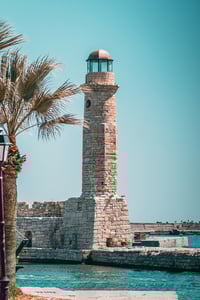
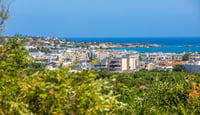
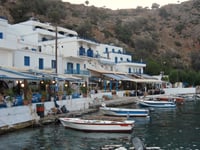
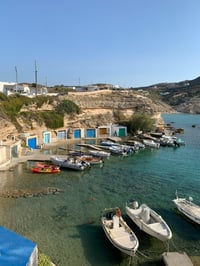
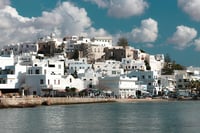
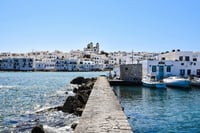
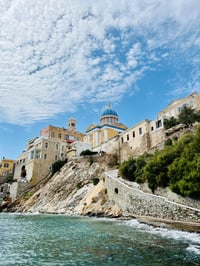
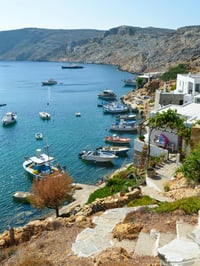
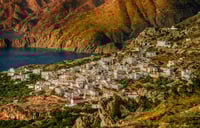
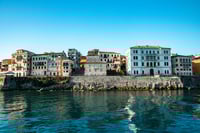
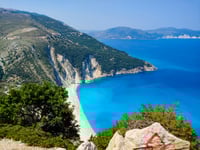
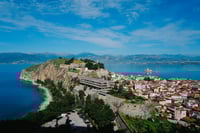
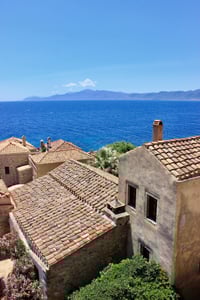
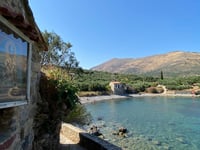
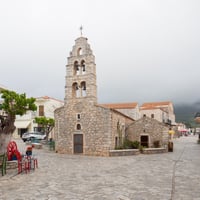
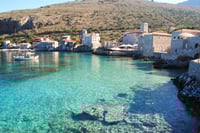
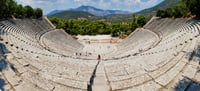
Patmos, Greece, offers a unique blend of profound spiritual heritage, serene natural beauty, and a tranquil atmosphere. It is known for its sacred sites, including the Monastery of Saint John the Theologian and the Cave of the Apocalypse, alongside picturesque villages and peaceful beaches with crystal-clear waters.
The main social hubs on Patmos are Skala and Chora. Skala, the island's port, hosts a variety of taverns, cafes, and bars, providing a lively yet generally relaxed ambiance for visitors to socialize. Chora, the old town, also serves as a gathering point for evening drinks, though the island's nightlife is typically more subdued compared to other Greek islands. Kambos Beach offers a vibrant setting with options for socializing.
Top 4 Things to do in Patmos
Visitors to Patmos can immerse themselves in the island's deep spiritual history, explore charming traditional villages, and unwind on its beautiful, diverse beaches, with options for island-hopping adventures.
1. Visit the Monastery of Saint John the Theologian and the Cave of the Apocalypse
Perched majestically atop Chora, the Monastery of Saint John the Theologian is a fortified Byzantine monastery dating back to the 11th century, recognized as a UNESCO World Heritage site. Exploring its courtyards, chapels, and museum offers insights into Patmos's profound spiritual heritage and architectural grandeur. Below the Monastery lies the sacred Cave of the Apocalypse, where Saint John is believed to have received his divine revelations and penned the Book of Revelation. One can see the indentations where he is said to have rested. It is a deeply atmospheric site, offering a quiet space for reflection.
Cost: Estimated entrance fee for the Monastery: €4-€5 per person. Estimated entrance fee for the Cave: €2-€3 per person. These fees are typically paid upon entry. Guided tours combining both sites are available, with prices varying significantly by operator, often starting from around €35-€40 per person for a group tour that includes transport and a guide.
Transport: Both sites are located in Chora. From Skala, the main port, local buses run frequently to Chora, with a journey time of approximately 10 minutes and a cost of about €1.50 per person. Taxis are also available from Skala, offering a quicker but more expensive option. Once in Chora, the sites are within walking distance, though the Monastery involves uphill cobblestone paths.
2. Explore Chora (Patmos Town)
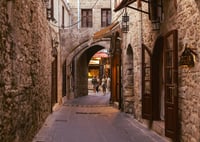
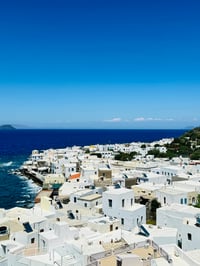
Wandering through the labyrinthine alleys of Chora, Patmos's picturesque capital and a UNESCO World Heritage site, is an experience in itself. The town captivates with its whitewashed houses, traditional architecture, and charming squares. Visitors can browse quaint boutiques, discover small Byzantine churches, and enjoy panoramic views of the Aegean Sea, particularly at sunset. The atmosphere is serene, inviting leisurely strolls and discovery.
Cost: Exploring Chora is free. Costs are incurred for shopping, dining at local tavernas, or visiting any specific museums (e.g., the Ecclesiastical Museum of Patmos within the Monastery or the Folklore Museum in one of the old mansions).
Transport: Chora is easily reached from Skala by public bus (€1.50, approximately 10 minutes) or taxi. The town itself is best explored on foot due to its narrow streets and compact size.
3. Relax at Psili Ammos Beach or Enjoy Water Sports at Kambos Beach
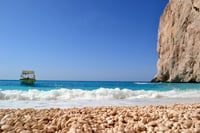
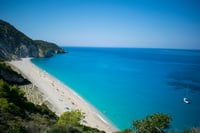
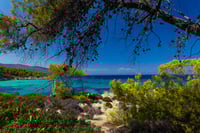
Patmos offers a selection of beautiful beaches to suit different preferences. Psili Ammos is frequently lauded as one of the island's most enchanting, featuring fine golden sand and inviting turquoise waters in a secluded cove. It remains largely unorganized, with a single family-run tavern providing refreshments. For those seeking more activity, Kambos Beach is a well-organized and popular choice with shallow, clear waters, ideal for families. It offers a range of water sports, from windsurfing and sailing to paragliding and canoeing, complemented by seaside taverns.
Cost: Access to the beaches is free. Water taxi fares to Psili Ammos vary (typically around €10-€15 return, though prices can change). Water sports rentals at Kambos Beach have individual costs, and dining at beachside taverns varies by order.
Transport: To reach Psili Ammos, one can take a water taxi from Skala port, which departs daily and takes about 45 minutes. Alternatively, a 25-30 minute hike from Diakofti (after driving as far as possible) is an option, though the final descent can be demanding. Kambos Beach is more accessible, connected to Skala by regular bus services (€1.50, 10-15 minutes) or a short drive by rental car/scooter.
4. Take a Boat Trip to Nearby Islets and Secluded Coves
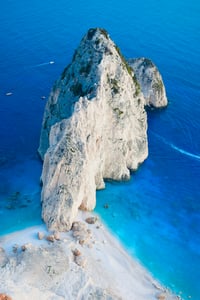
Embarking on a boat trip from Skala offers a delightful way to discover Patmos's surrounding beauty and explore islands like Lipsi and its famous islets, such as Aspronisia, known for their stunning crystal-clear blue waters. These excursions often include stops at remote, pristine beaches inaccessible by road, allowing for swimming and snorkeling in serene settings. It provides a different perspective of the Dodecanese archipelago and a chance to truly unwind on the Aegean Sea.
Cost: Costs for boat trips vary based on duration, destination, and whether it's a group tour or private rental. Specific prices are best obtained directly from operators at Skala port. A simple boat trip might cost around €20-€40 per person for a half-day or full-day excursion.
Transport: Boat trips depart from Skala, the main port of Patmos, which is easily reachable by foot if staying in Skala, or by bus/taxi from Chora and other villages.
At TFA Travel we believe in travel for all. Our mission is to enable people to explore the world as easily as possible without having to pay a travel agent a huge commission.
Our typical audience are those that want to see something new and get involved with authentic experiences of a country. Whether you are a backpacker, solo traveller, solo female traveller, straight or LGBTQ+ couple, family, you will find local and authentic experiences here.