1. Porta Nigra
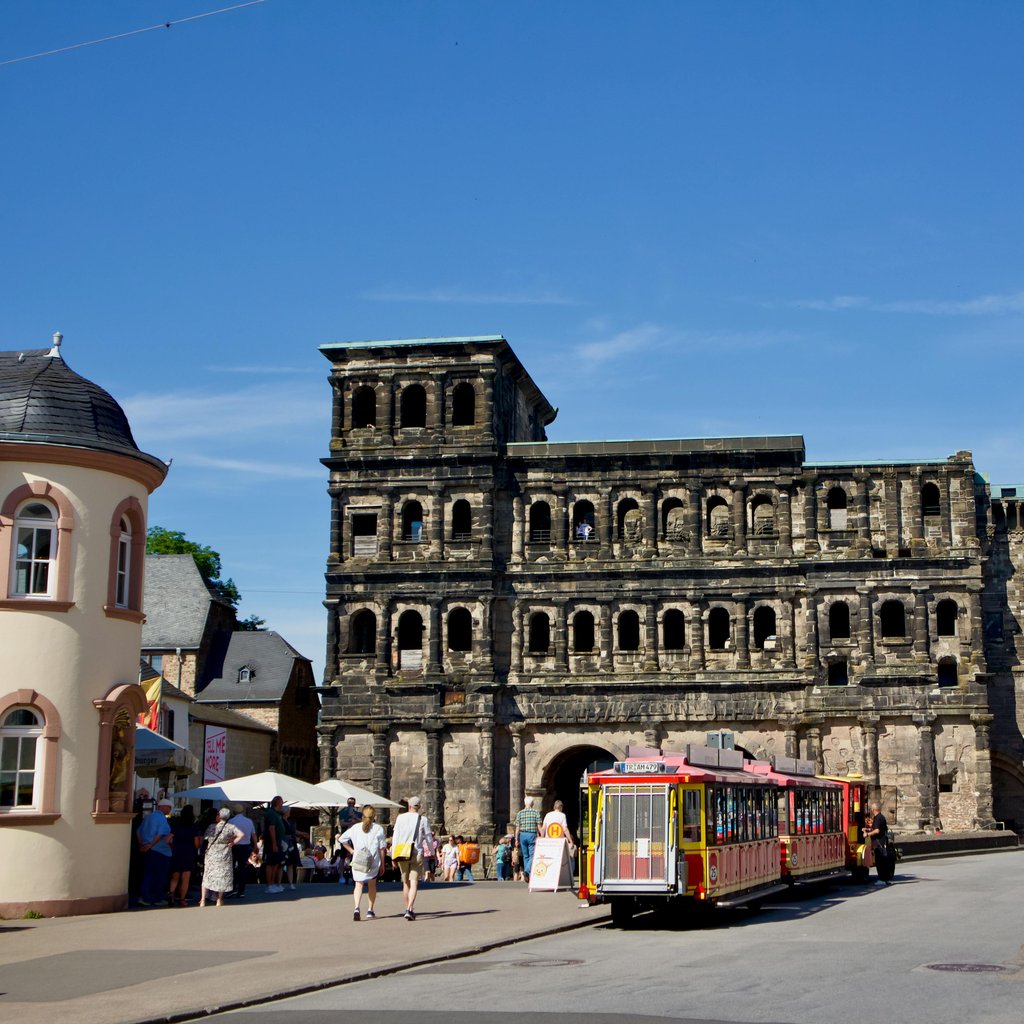
Step through Trier's iconic Porta Nigra, the remarkably preserved Roman city gate dating from around 170 AD. Explore its multi-tiered interior and climb to the upper levels for expansive views of the city. Originally a massive fortified gateway, it later served as a church, which contributed to its excellent preservation. Consider a guided tour to hear engaging historical narratives, bringing the Roman era to life.
Cost: Adults: €6.00. Children (6-18): €2.50. Family tickets (1 adult + up to 4 children or 2 adults + up to 4 children) are available for €4.00 and €8.00 respectively. An AntikenCard Premium, covering multiple Roman sites, is €18.00.
Transport: The Porta Nigra is centrally located and easily accessible on foot from most parts of the city center. It is a short walk from Trier Central Station.
2. Trier Cathedral (Trierer Dom) and Church of Our Lady (Liebfrauenkirche)
Discover two adjacent UNESCO World Heritage sites, the High Cathedral of Saint Peter and the Church of Our Lady. The Cathedral, Germany's oldest, showcases a blend of Roman, Gothic, and Baroque styles, reflecting over 1700 years of continuous worship. The Liebfrauenkirche, an early Gothic church, stands out with its unique twelve-petaled rose floor plan and impressive stained glass. Take time to appreciate the architectural evolution within these sacred spaces.
Cost: Admission is free for both the Cathedral and the Church of Our Lady, though donations are welcome. Special exhibitions or guided tours may incur a fee.
Transport: Both churches are situated in the heart of Trier, a short walk from the Porta Nigra and the Hauptmarkt.
3. Imperial Baths (Kaiserthermen)
Explore the extensive ruins of the Imperial Baths, a grand Roman bath complex dating from the 3rd and 4th centuries AD. Wander through the massive above-ground structures and venture into the fascinating underground corridors, which offer a unique perspective on Roman engineering and daily life. The site provides a compelling glimpse into the scale and sophistication of Roman public amenities.
Cost: Adults: €3.00. Children up to 17 years: €2.00. An AntikenCard Premium, which includes admission to this and other Roman sites, is €18.00 for adults.
Transport: The Imperial Baths are located at the eastern edge of the city center, a comfortable walk from the Hauptmarkt.
4. Hauptmarkt (Main Market Square)
Immerse yourself in the vibrant atmosphere of Trier's Hauptmarkt, the historic main square. Surrounded by beautifully preserved medieval and Renaissance buildings, including the 15th-century Steipe and the Market Fountain, it is a hub of local activity. Enjoy a coffee or meal at one of the many cafes and restaurants, or simply observe daily life. During certain seasons, the square hosts lively markets, such as the acclaimed Christmas Market.
Cost: Free to visit. Costs for food, drinks, and shopping vary.
Transport: The Hauptmarkt is the central point of Trier's Old Town and easily accessible on foot.
5. Karl Marx House
Visit the birthplace of Karl Marx, now a museum dedicated to his life and work. The Baroque residential building houses a permanent exhibition that traces Marx's life, his intellectual development, and the global impact of his ideas. The museum provides an insightful look into 19th-century philosophy, sociology, and economics.
Cost: Adults: €5.00. Concessions: €3.50. Families (2 adults, 1-4 children): €9.00.
Transport: The Karl Marx House is about a 10-minute walk from the Cityparkhaus. Public buses (lines 3, 13, 83) stop directly at Karl-Marx-Haus from Trier main station.
6. Roman Bridge (Römerbrücke)
Walk across the Römerbrücke, Germany's oldest bridge, still actively used today. Its original basalt pillars date back to the mid-2nd century AD, making it a testament to Roman engineering. From the bridge, you can admire the Moselle River and the surrounding landscape. A bronze model on the bridge illustrates its Roman appearance.
Cost: Free to access.
Transport: The Roman Bridge is located over the Moselle River, west of the city center. It is accessible by walking and public transport. Bus line 10 stops at Westbahnhof, near the western end of the bridge.



/waren_(müritz)_filewaren_mueritz_23.jpg)