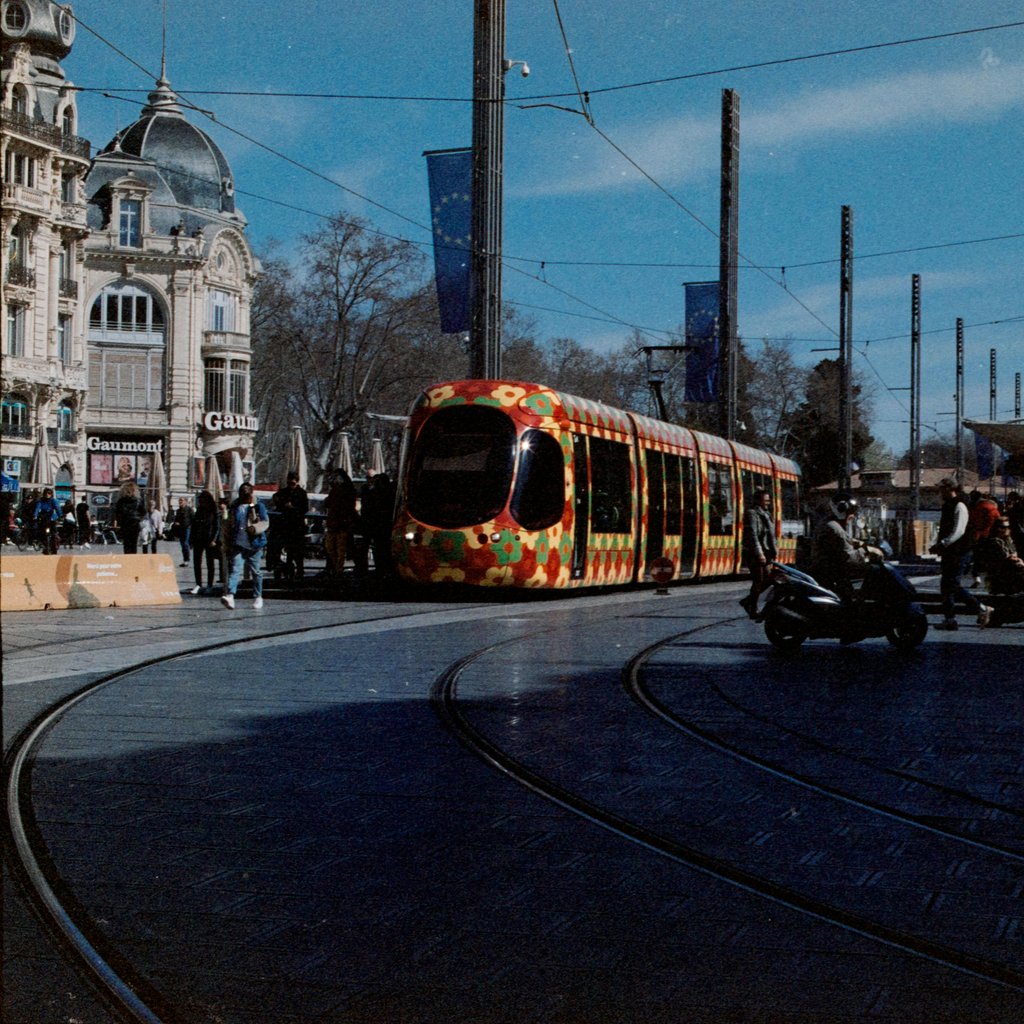
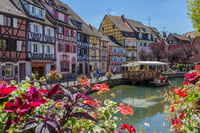
Montpellier, a vibrant city in the South of France, seamlessly blends its rich history with a contemporary and lively atmosphere. One experiences its charm through winding medieval streets and grand architectural statements, while modern districts showcase innovative design. The city also benefits from its close proximity to the Mediterranean, offering easy access to inviting beaches.
The city's social life thrives, especially within the historic heart, L'Écusson, where traditional bars and modern clubs are found among its narrow streets and hidden squares. The iconic Place de la Comédie serves as a central gathering spot, filled with cafes, street performers, and an energetic crowd. For those seeking a modern social setting, districts like Port Marianne and Les Arceaux present upscale lounges and trendy bars. The Marché du Lez offers a unique social experience, combining food trucks, craft beer, and DJs in a re-imagined warehouse environment. Montpellier’s large student population contributes to a welcoming and dynamic evening scene, with numerous nightclubs like Le Rockstore and L'Antirouille, alongside cocktail bars such as Le Fizz, providing diverse entertainment options.
Top 7 Things to do in Montpellier
One can delve into Montpellier's rich history and vibrant arts scene, explore its unique architectural blend, connect with nature in lush gardens, and unwind at nearby Mediterranean beaches.
1. Explore Place de la Comédie and L'Écusson
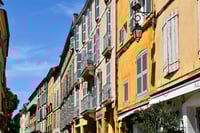
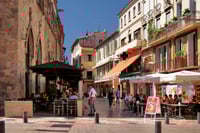
At the heart of Montpellier lies the lively Place de la Comédie, an ideal starting point to absorb the city's energy. Here, one finds the iconic Fontaine des Trois Grâces amidst grand 18th-century buildings, bustling with street performers and cafes. From this central square, narrow medieval streets lead into L'Écusson, the historic Old Town. Wandering through these winding passages reveals a charming world of honey-colored limestone, unique boutiques, hidden squares, and unexpected street art, including impressive trompe l'oeil murals. It is easy to get lost in the beauty of its architecture and local culture.
Cost: Free to explore. Costs for food, drinks, or shopping vary.
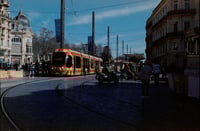
Transport: The Place de la Comédie is centrally located and easily walkable from most city center accommodations. It is a major hub for Montpellier's tram network, with lines 1 and 2 intersecting directly at the 'Comédie' stop.
2. Visit the Musée Fabre
For art enthusiasts, the Musée Fabre presents one of France's largest and most significant collections of European art, spanning from the 14th century to contemporary works. Housed in a beautifully renovated space that marries classical and modern architecture, one can discover masterpieces by renowned artists such as Delacroix, Courbet, and the local artist Frédéric Bazille. The museum offers an enriching cultural journey through various artistic periods, including a notable section on Flemish and Dutch paintings. Allow ample time to fully appreciate the extensive exhibits.
Cost: Adult entry is typically €12. Reduced rates are available for students and those aged 18-25 at €9. Children under 6 enjoy free admission. Guided tours may incur additional costs.
Transport: The museum is conveniently located close to the Place de la Comédie. It is a short walk from the 'Comédie' tram stop (lines 1 and 2) or the 'Corum' tram stop (lines 1, 2, and 4).
3. Stroll through the Promenade du Peyrou and see the Arc de Triomphe
Embark on a leisurely walk to the Promenade du Peyrou, a grand esplanade offering panoramic views across Montpellier and beyond, sometimes even revealing the distant Pic Saint-Loup. This impressive public space is home to a majestic equestrian statue of Louis XIV and is crowned by the city's Arc de Triomphe, also known as Porte du Peyrou. One can marvel at its detailed neoclassical design and appreciate the 18th-century Aqueduc Saint-Clément, a stunning Roman-style aqueduct that stretches gracefully into the distance. This area provides both historical grandeur and serene green spaces for relaxation.
Cost: Free to access and explore.
Transport: The Promenade du Peyrou is within walking distance from the city center. It can also be reached via tram, with stops like 'Peyrou - Arc de Triomphe' (lines 1, 2, 4) nearby.
4. Relax in the Jardin des Plantes
Escape the city's hustle at the Jardin des Plantes, France's oldest botanical garden, established in 1593. This serene haven, spanning 11 acres, invites visitors to explore a rich diversity of plant species, ancient trees, tranquil ponds, and tropical greenhouses. One discovers various themed sections, including the École de Botanique with its medicinal plants and a charming bamboo forest. It offers a peaceful retreat for contemplation and a deeper appreciation of nature's wonders.
Cost: Entry to the Jardin des Plantes is free. However, specific guided tours or workshops may cost around €5-€10.
Transport: The garden is easily accessible. Take Tram Line 1 to 'Place Albert 1er – Saint-Charles' (about a 5-minute walk) or Tram Line 4 to 'Albert 1er – Cathédrale' (a few steps away). Several bus lines also serve the area.
5. Experience Modern Architecture in the Antigone District
Step into a different side of Montpellier by exploring the Antigone District, a striking example of postmodern urban planning. Designed by architect Ricardo Bofill, this district showcases grand classical-inspired buildings, geometric squares, and impressive sculptures, all along the Lez River. Continuing further, one can admire 'L'Arbre Blanc' (The White Tree), a unique residential tower renowned for its jutting balconies and innovative design, emblematic of Montpellier's contemporary spirit. This area offers a fascinating contrast to the medieval Old Town.
Cost: Free to explore.
Transport: The Antigone District is walkable from the city center or accessible via tram. Take Tram Line 1 to 'Place de l'Europe' or 'Antigone' stops. 'L'Arbre Blanc' is a short walk from the 'Port Marianne' tram stop (lines 1, 3).
6. Discover the Marché du Lez
For a taste of Montpellier's modern social scene and culinary innovation, the Marché du Lez offers a vibrant and unique experience. Located in a re-imagined industrial space, one finds a bustling environment filled with food trucks offering diverse cuisines, craft beer stands, and often, live music from DJs. It is a popular spot for locals and visitors alike to socialize, enjoy good food, and soak in a dynamic, creative atmosphere, particularly on sunny days or in the evening.
Cost: Entry is free; however, food, drinks, and shopping at the market are at individual cost.
Transport: The Marché du Lez is easily accessible by tram. Take Tram Line 3 to 'Pablo Picasso' or Tram Line 1 to 'Port Marianne' and then a short walk.
7. Unwind at Palavas-les-Flots Beach
A short journey from the city center leads to the inviting sands of Palavas-les-Flots, a charming Mediterranean coastal town. Here, one can enjoy relaxing on the beach, swimming in the clear blue waters, or strolling along the seaside promenade. The town offers a traditional seaside experience with cafes, restaurants, and shops. For a unique perspective, consider a ride on the Transcanal, which provides elevated views of the coast. It’s an ideal escape for a half-day or full-day of sun and sea.
Cost: Enjoying the beach is free. The Transcanal costs €2 one-way or €3 round-trip. Public transport costs around €3 for a combined tram and bus ticket. A taxi can range from €24-€40.
Transport: Reach Palavas-les-Flots by taking Tram Line 3 from the city center to 'Pérols-Étangs de l'Or', then transfer to a local shuttle bus (Line 1). Alternatively, take Tram Line 4 to 'Garcia Lorca', and then Bus 631 to 'Salle Bleue'. The journey typically takes about an hour. Taxis are also readily available, taking around 10-20 minutes.
At TFA Travel we believe in travel for all. Our mission is to enable people to explore the world as easily as possible without having to pay a travel agent a huge commission.
Our typical audience are those that want to see something new and get involved with authentic experiences of a country. Whether you are a backpacker, solo traveller, solo female traveller, straight or LGBTQ+ couple, family, you will find local and authentic experiences here.