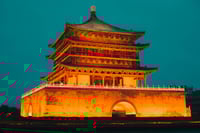
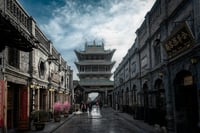
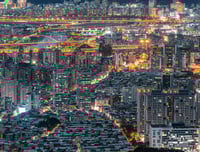
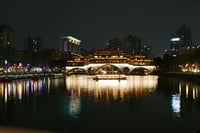
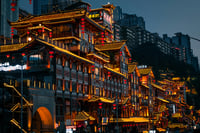
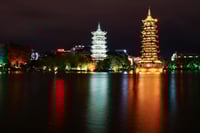
Dunhuang is an ancient oasis city in the Gobi Desert, a significant historical and cultural hub along the Silk Road. One discovers the extraordinary Mogao Grottoes, a UNESCO World Heritage site rich in Buddhist art, including intricate murals and sculptures that span over a millennium. Beyond these historical treasures, the destination offers dramatic desert landscapes, notably the Singing Sand Mountains and the serene Crescent Lake, alongside remnants of ancient Silk Road fortifications. It particularly appeals to those with an interest in history, culture, and photography, as well as adventurers seeking unique desert experiences.
For socializing, the vibrant Shazhou Night Market, also known as Dunhuang Night Market, serves as a central gathering point. Here, one can explore local culinary specialties and handicrafts, enjoying a lively atmosphere that facilitates interaction with other travelers. Furthermore, the city center provides accessible accommodation options, including budget hostels, often featuring common spaces ideal for meeting fellow backpackers.
Top 4 Things to do in Dunhuang
Dunhuang offers a range of activities focusing on ancient Silk Road history, profound Buddhist art, and unique desert landscapes.
1. Mogao Grottoes
These UNESCO World Heritage site caves house one of the world's most extensive collections of Buddhist art, with intricate murals and sculptures spanning over a millennium. Exploring these ancient grottoes offers a profound insight into the cultural exchange along the Silk Road and the evolution of Buddhist art. Visitors typically begin at the Digital Exhibition Center to watch informative films before taking a shuttle to the caves. It is advisable to book tickets in advance, especially during peak season, as visitor numbers are limited daily. Photography is not permitted inside the caves to preserve the delicate artworks.
Cost: Regular ticket prices range from CNY 160 to CNY 258, depending on the season and cave access. Supplementary tickets, which cover fewer caves and do not include the Digital Exhibition Center, are approximately CNY 100.
Transport: A direct bus service operates from Dunhuang Bus Station to the Mogao Caves, costing approximately CNY 8 for a 28-minute journey. Alternatively, a taxi ride from the city center typically costs between CNY 45 and CNY 60 and takes about 24 minutes.
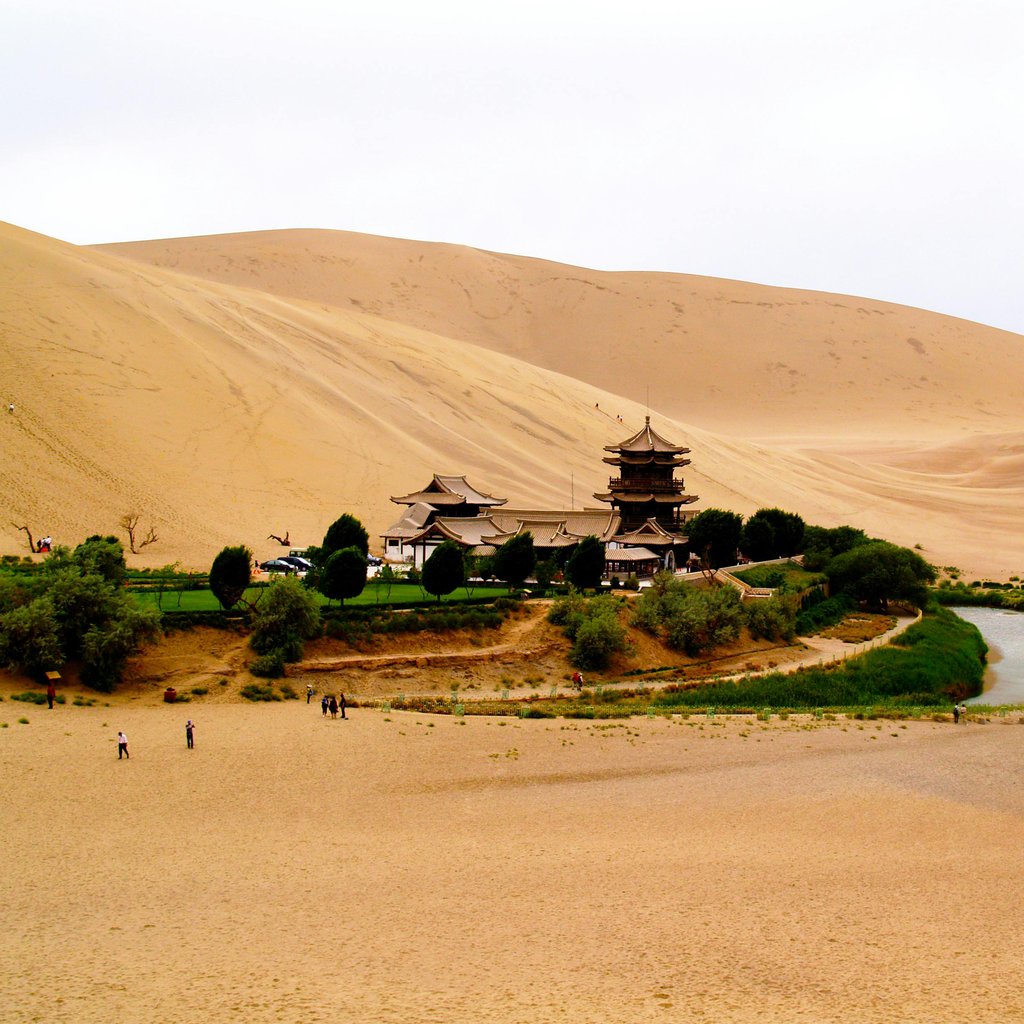
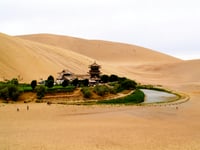
2. Singing Sand Mountains (Mingsha Shan) and Crescent Lake
Located just outside the city, these golden sand dunes are named for the unique 'singing' sound produced by the shifting sand. Nestled within the dunes is the serene Crescent Lake, a natural oasis that has retained its crescent moon shape for centuries. It is particularly striking at sunrise or sunset. Visitors can climb the dunes using wooden ladders, ride camels, or try sand sliding for an adventurous experience. Recording fingerprints at the exit allows for re-entry within three days, offering flexibility for multiple visits.
Cost: The entrance ticket for both sites is around CNY 110 to CNY 120. Activities like camel riding typically cost an additional CNY 80.
Transport: The site is easily accessible from Dunhuang city center. Bus No. 3 runs directly to the scenic area for approximately CNY 1. A taxi ride from downtown costs between CNY 10 and CNY 20.
3. Shazhou Night Market
This vibrant market serves as a central hub for evening activity, offering a lively atmosphere to explore local culinary specialties and handicrafts. Visitors can sample traditional Dunhuang dishes like Yellow Noodles with Donkey Meat and Mutton Soup, or browse for unique souvenirs such as replicas of Dunhuang murals, silk products, and sand paintings. It's an excellent place to experience local culture and interact with other travelers. The market is open all day but is most lively after 8 PM.
Cost: Entry to the market is free.
Transport: Shazhou Night Market is conveniently located near the city center, making it easily walkable from most downtown hotels. A short taxi ride from other parts of the city typically costs around CNY 5 to CNY 10. Public buses (No. 1, 2, 3, or 4) also serve the area.
4. Yumen Pass and Han Dynasty Great Wall
Venturing west of Dunhuang, one discovers the historical remnants of the Silk Road's frontier. Yumen Pass, also known as Jade Gate Pass, was a crucial strategic point for trade and defense during ancient dynasties. Nearby lie the ruins of the Han Dynasty Great Wall, including beacon towers that once served as a vital communication system. Although thousands of years of weathering have made some sections fragile and fenced off for preservation, exploring these sites offers a tangible connection to the ancient Silk Road's military and trade history. This area is typically visited as part of a longer 'west-line' tour due to its remote location.
Cost: A combined ticket for Yumen Pass and the Han Dynasty Great Wall (including Hecang Fortress) is approximately CNY 40. A chartered minibus for a one-day west-line tour, which often includes these sites and others like Yardang National Geopark, typically costs between CNY 400 and CNY 600.
Transport: There is no direct public bus service to these sites. Visitors generally hire a private car or join a chartered minibus tour from Dunhuang city. The journey takes approximately 1-1.5 hours one way.
At TFA Travel we believe in travel for all. Our mission is to enable people to explore the world as easily as possible without having to pay a travel agent a huge commission.
Our typical audience are those that want to see something new and get involved with authentic experiences of a country. Whether you are a backpacker, solo traveller, solo female traveller, straight or LGBTQ+ couple, family, you will find local and authentic experiences here.